
Structural Drying and Dehumidification in Katy, TX
A floor can look dry and still hold enough moisture to warp, rot, or grow something unwanted. Wood framing, drywall, subfloors, and insulation drink water slowly and give it back even more slowly. Katy Restoration Pro uses air movers, dehumidifiers, and moisture readings to take that water out of the structure, so you are not guessing whether the building is dry.
In Katy's humid climate, drying takes planning, because the air outside is often as wet as the air inside.
- Upfront Pricing
- Free Estimates
- Licensed and Insured
Moisture Solutions Near You in Katy, TX
Searching for moisture solutions in Katy usually means something is wet and you cannot see where. Our drying crews cover homes, rentals, and commercial buildings in Katy and the neighboring communities. Send us the address and tell us what got wet, and we will explain how structural drying would work in your building.
Why Buildings Hold Water
Porous Materials Absorb Quickly
Drywall, insulation, carpet padding, and wood draw water in and release it slowly.
Wet Air Slows Everything Down
When the air is already full of water vapor, wet materials cannot release theirs. Dehumidifiers fix that.
Water Travels Out of Sight
It moves along framing, down inside walls, and under flooring, far from the spot that looked wet.
Closed Spaces Trap Moisture
Wall cavities, ceiling voids, and cabinet bases stay wet when nothing moves air through them.
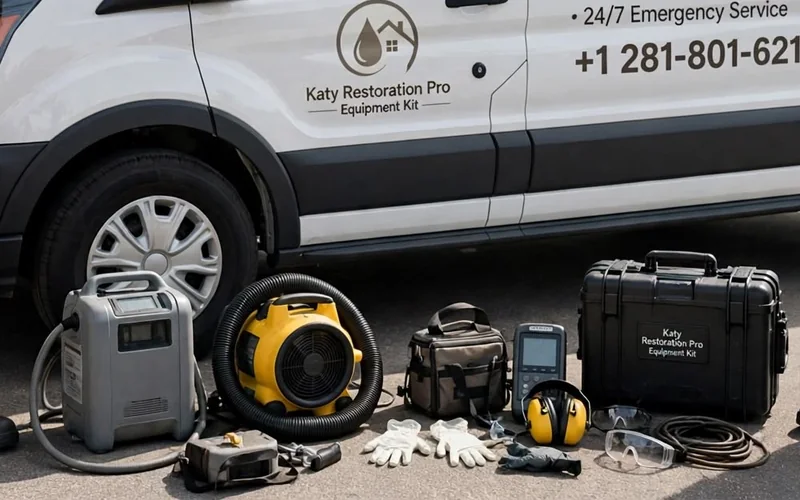
Our Drying Equipment
Air Movers
High-velocity fans push moving air across wet surfaces so the water can evaporate.
Dehumidifiers
Commercial units pull the evaporated water out of the air, so it does not settle back into the building.
Cavity and Floor Drying Tools
Hoses and panels push dry air into wall cavities, under cabinets, and beneath hard floors without tearing everything out.
Moisture Meters and Thermal Cameras
Instruments find water that the eye cannot see and confirm when drying is complete.
How We Dry a Structure
Map the Moisture
Readings across walls, floors, and ceilings give us a picture of what is wet and a baseline to compare against.
Set Up a Drying Chamber
We contain the wet area so equipment dries the right space and not the whole house.
Place Equipment and Start
Air movers and dehumidifiers go where the readings call for them.
Check Every Visit
Meter readings are logged each time we return, and equipment is adjusted to match.
Confirm Dry and Remove Equipment
Drying is finished when wet materials match a dry reference, not when a calendar says so.
Why Choose Our Structural Drying Specialists
Standards-Based Work
We follow ANSI/IICRC S500, the written standard for water damage restoration, and fit it to your building.
Numbers You Can Check
You get to see the readings, not just hear that things are dry.
Less Tear-Out
Cavity drying tools often let us save drywall and flooring that would otherwise be removed.
Honest Timing
We explain what affects drying time and update you as readings change, instead of promising a fixed number of days.
Signs a Structure Is Still Wet
- A musty smell that returns after the room has been aired out
- Baseboards, trim, or cabinet bases that feel cool or damp to the touch
- Paint or wallpaper that bubbles, peels, or stains again
- Floors that cup, buckle, or feel soft underfoot
- A reading on a moisture meter higher than the same material in a dry room
Any of these means the structure may need more drying than a household fan can give.
What Affects Drying Time
The size of the loss, the materials that got wet, how long they stayed wet, and the humidity in the building all play a part. Thick framing and subfloors dry slowly, and drywall dries faster. We cannot give an honest number before we measure, so we track the readings and tell you where drying stands at each visit.
Keeping Mold Away
Moisture that lingers invites mold. Thorough drying is the best protection, and if growth has already started, our mold remediation service handles it.
Related Steps
Drying comes after the standing water is out, which is covered on our water extraction and removal page.